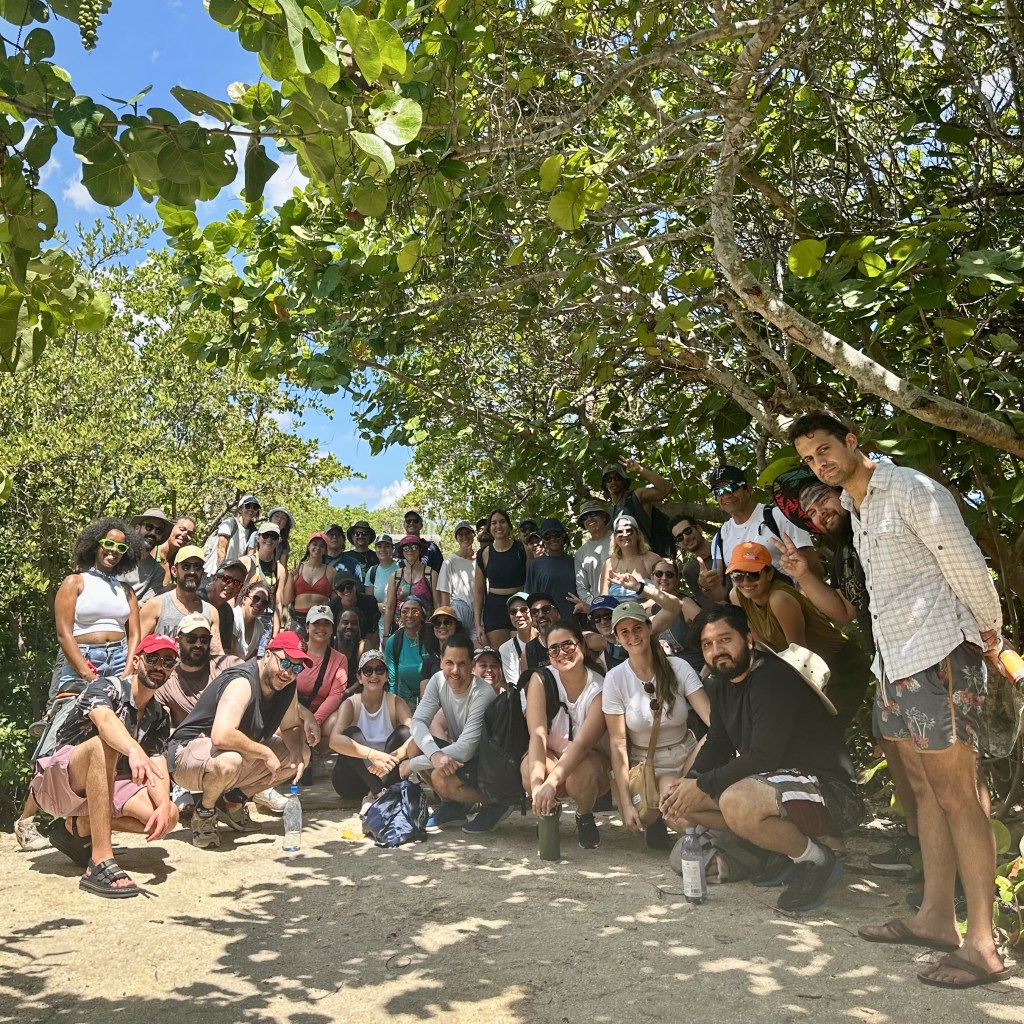
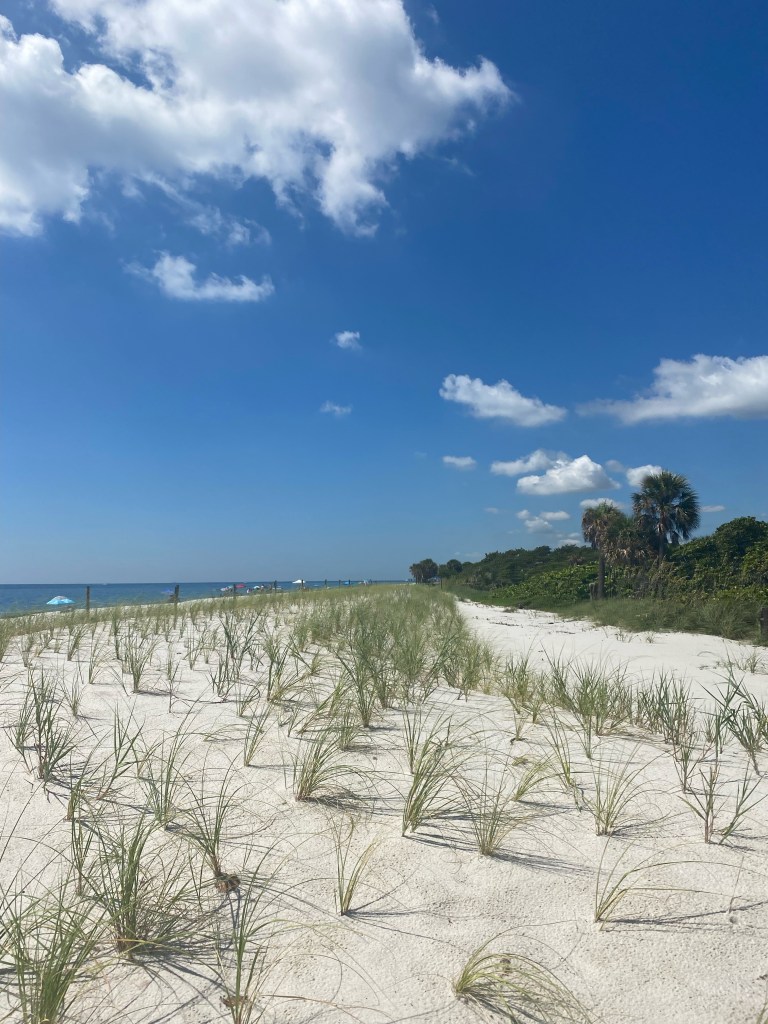
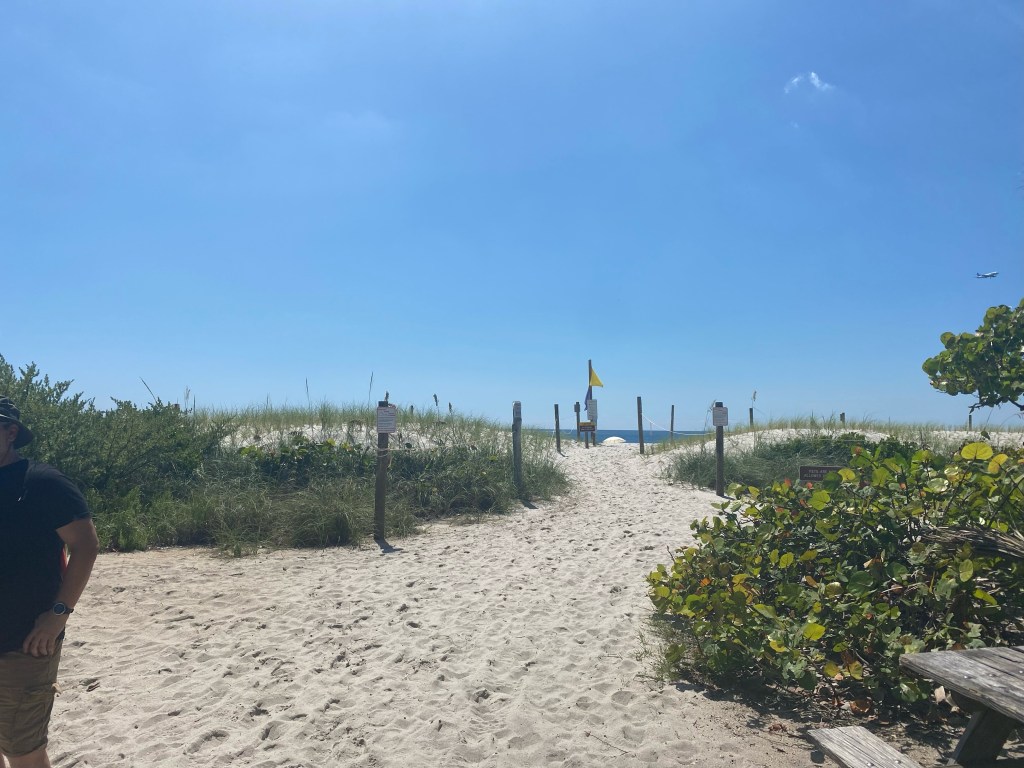
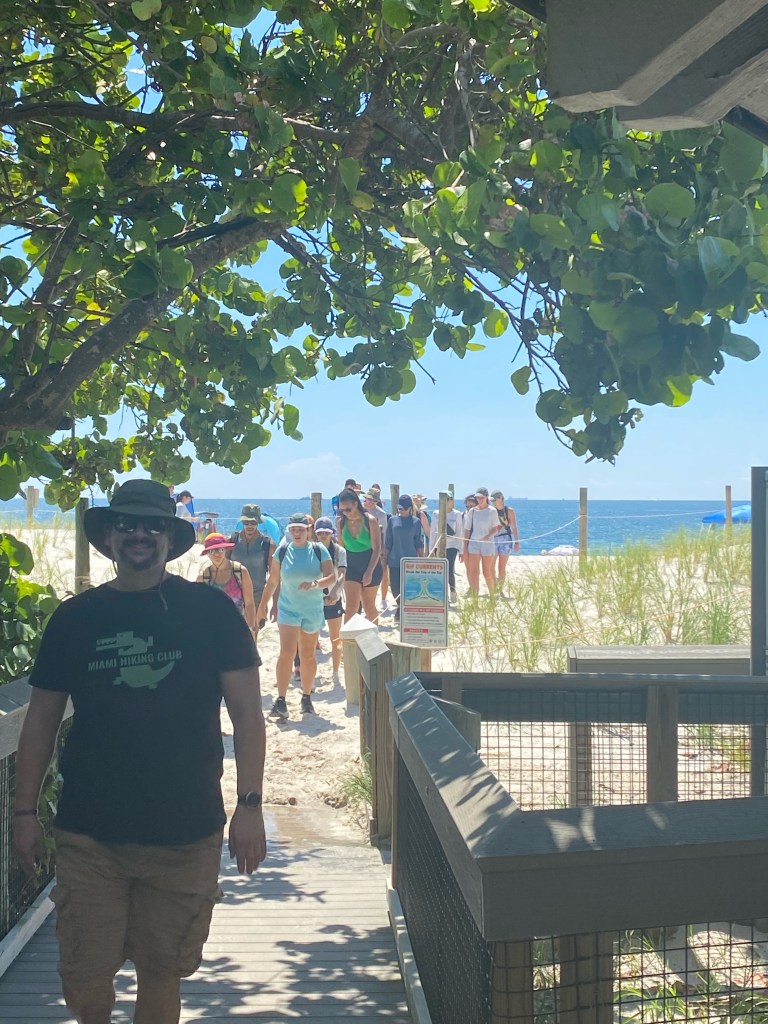
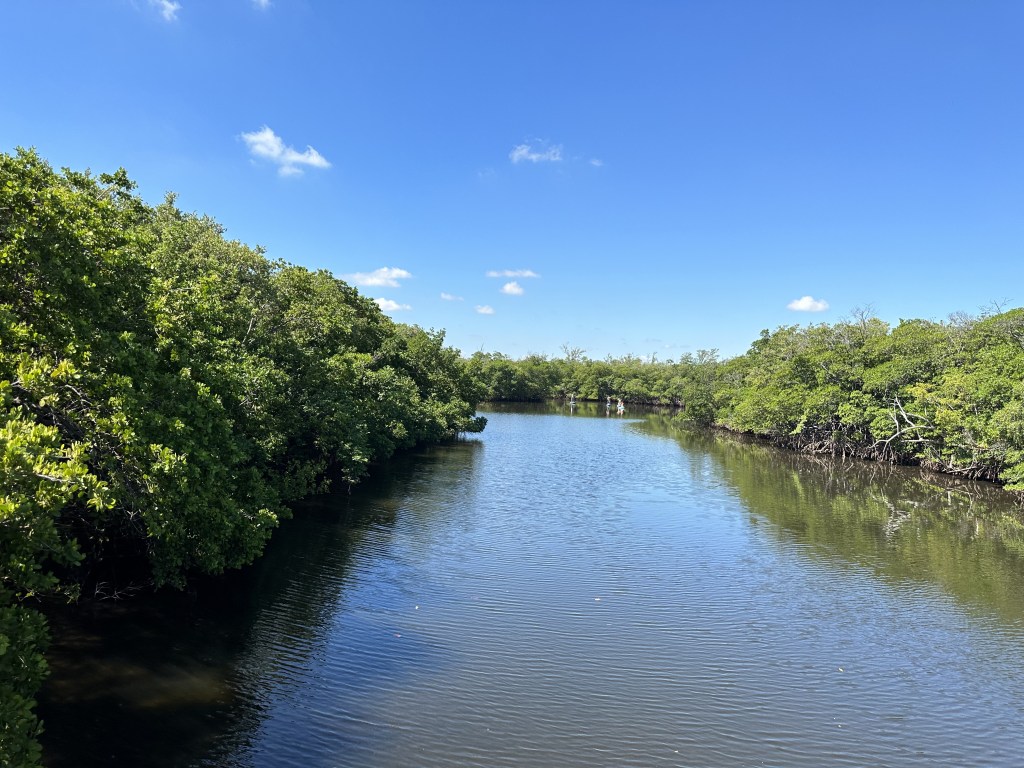
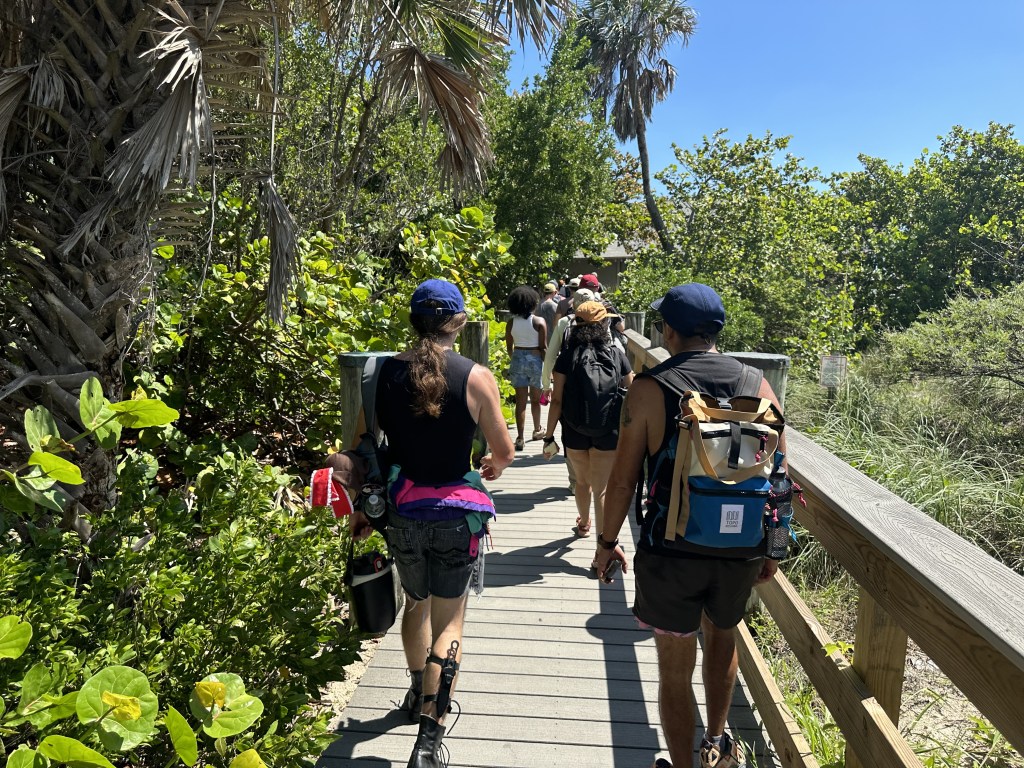
It’s getting hot in South Florida! For June’s meetup we opted for a short 3-mile hike at Dr. Von D. Mizell-Eula Johnson State Park. After the hike on the Barrier Island Nature Trail, hikers had the option to hang out on the beach or go kayaking.
Dr. Von D. Mizell-Eula Johnson State Park, one of Florida’s 175 state parks, has significance in the Civil Rights Movement in South Florida. It is named after leaders who led “wade-in” protests to desegregate South Florida beaches in the 1950s and 1960s.
The following excerpt from the Westside Gazette about the park’s re-naming ceremony in August 2016 offers more history:
During those days Dania’s “Colored Beach” was the only place where Blacks could enjoy some leisure time with their families on the eastern shores of Broward County.
Lorraine Mizell, the niece of the late Dr. Von D. Mizell, had a particular connection with the day’s festivities as being one of the original groups of residents to join Dr. Mizell and Eula Johnson in the first “wade-in” by Blacks in 1961, in an attempt to desegregate Fort Lauderdale Beach, which had been designated for “whites only.” Mizell, 75, recalled the incident describing the chain of events, as if it were just yesterday.
“My sister Myrtis and me, along with two other college students participated in the first “Wade-In” in 1961. My uncle, Dr. Mizell and Mrs. Eula Johnson drove a group of us college students to Fort Lauderdale Beach. We all got out and Dr. Mizell told us to get in the water while he and Mrs. Johnson stood near on the beach. As we got in the water, whites nearby started staring at us. The whites that were in the water got out. After about 10 minutes a police officer showed up and briefly spoke with Dr. Mizell. Afterwards my uncle told us to come out of the water.”
Although the first “wade-in” resulted without incident, sub-sequent attempts to integrate the beach led by Johnson resulted in arrests of those who participated.
A reminder to slow down and enjoy nature, but read those historic markers, too. Your local park, trail, or beach likely has its own hidden history.





 Miami Hiking Club